
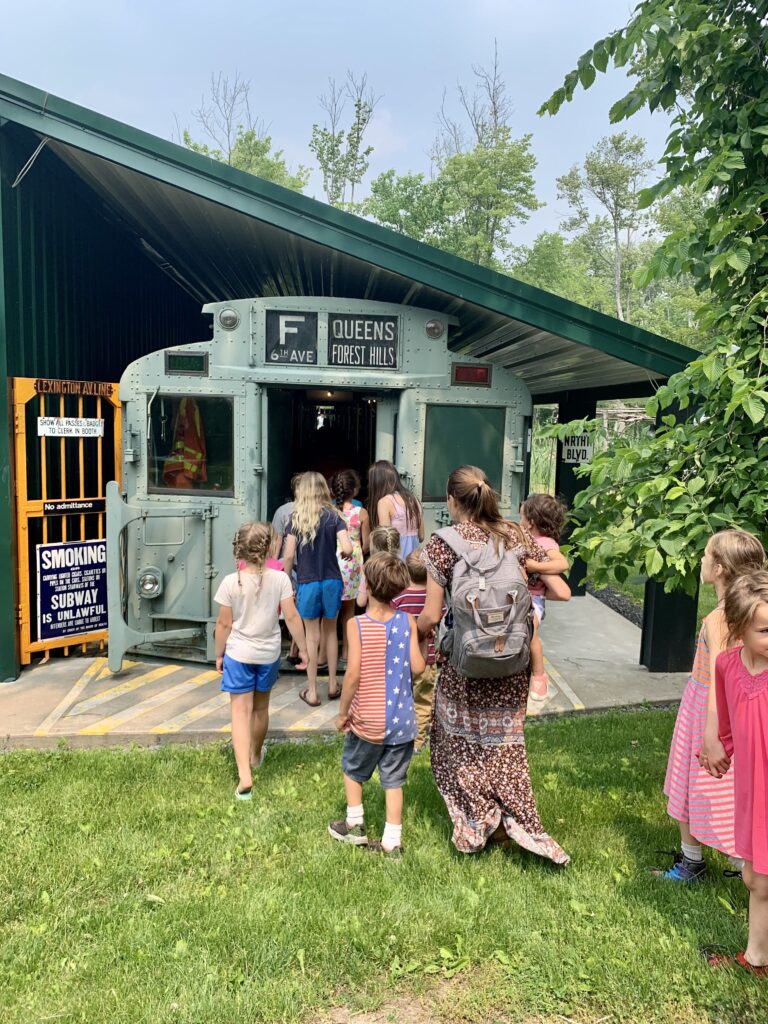
If you’re a homeschool parent looking for a fun and meaningful way to bring literature to life, starting a kids book club can be the perfect addition to your homeschool routine! A homeschool book club encourages kids to fall in love with reading, gives them a chance to socialize with their peers, and provides opportunities for hands-on learning through discussions, special field trips, activities, and themed snacks. It’s honestly been the highlight of our homeschool experience, in my personal opinion!
In this post, I’ll walk you through how to start a kids book club for homeschoolers—from choosing books to hosting your very first meeting!
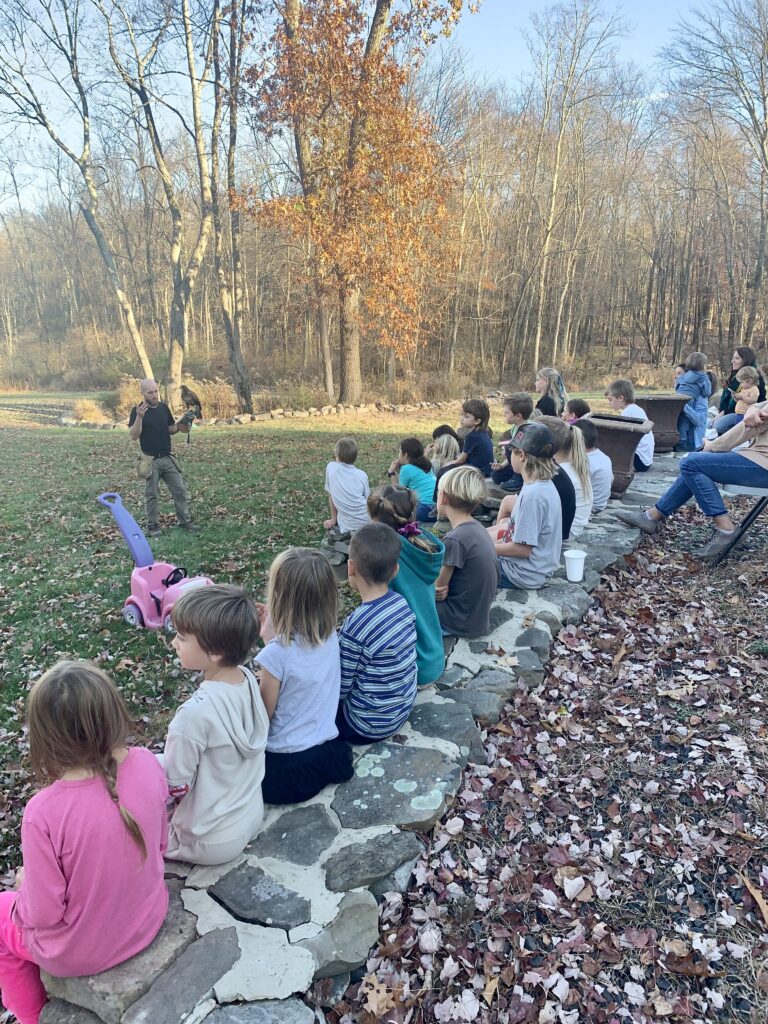
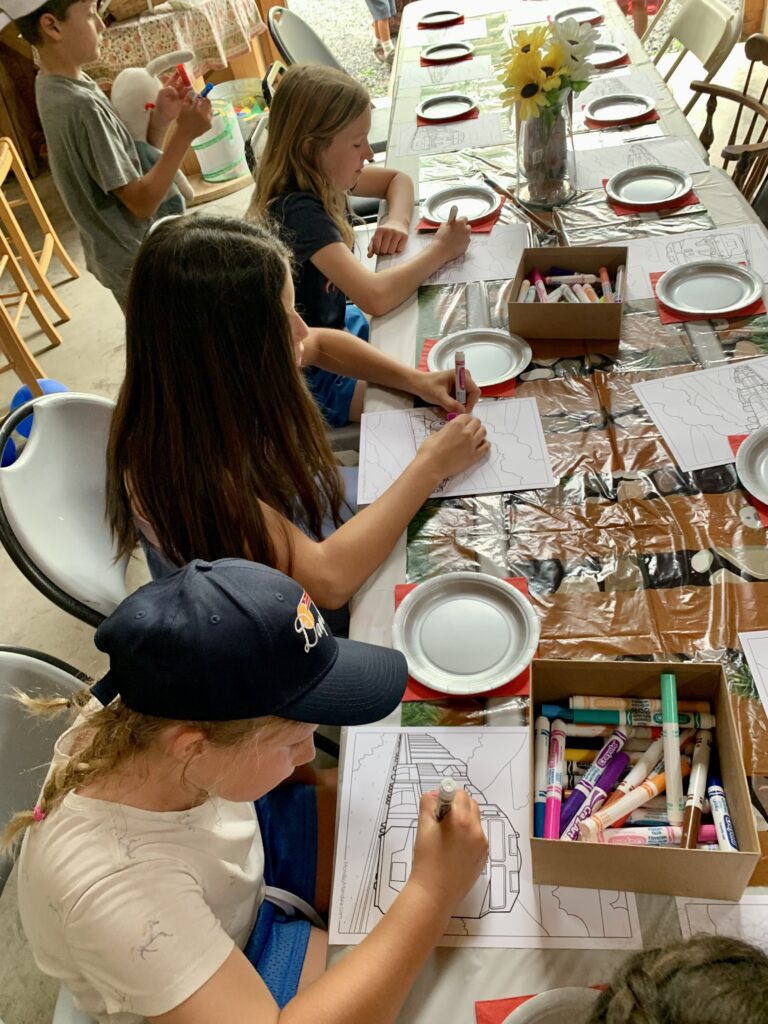

This post contains affiliate links, which means I make a small commission at no extra cost to you. See my full disclosure here.
Why Start a Homeschool Book Club?
A homeschool book club offers so much more than just reading. It:
- Encourages kids to think critically and discuss ideas.
- Helps homeschool families build community.
- Makes reading interactive and fun with crafts, games, trips and themed food.
- Creates lasting memories centered around really great stories.
Step 1: Choose the Right Age Group and Format
Decide who your book club is for. Will it be for early readers (ages 6–8), upper elementary, middle school, or a mix? Tailor book choices and activities to the group’s age. When my oldest was just about to start kindergarten, I had the idea to start a book club and sent out a message to all of my friends. My thought was to choose a few themed books from our library and read them aloud together since my kids were so young. We had our first meeting and only one other family came, and while we still had a wonderful time I realized that the need was not so great because of the stage of life all of my friends were in with littles, which made it very hard for them to come. That book club quickly fizzled out. I was so sad!
But fast forward a few years, and our homeschool book club is now busting at the seams! It just wasn’t the right time back then. You’ll need to see if there is enough interest and what would be the most ideal time that could work for most people! Don’t be discouraged if you don’t have have a lot of interest right away. Just go ahead and have fun doing it with your own family, and who knows? It may just grow more organically over time like ours did!
Ideas for How to Format Your Book Club:
- Parent-led discussions with guided questions (Decide on which parents are comfortable with leading a discussion time and if there are a few, try to rotate them with each meetup!)
- Kid-led discussions for older readers. We are getting to the point in our book club where some of the kids are old enough where they can start to take ownership of the book club gathering. This year we are going to assign a monthly meet-up for them to run for everyone – craft time, discussion, etc! Not only will this be a fun experience, but will help them learn and grow in so many ways and take the pressure off of us parents!
- Activity-based clubs where reading ties into a craft, science experiment, or an outdoor adventure!
Step 2: Pick Living Books
Choose books that are age-appropriate, well-written, spark discussion but most of all, make sure they are “living books“!
So What Are “Living Books”?
Charlotte Mason said: “We must read to our children books that nourish the mind, just as food nourishes the body.”
Written by One Author with Passion
A living book is usually written by a single author who cares deeply about the subject. That passion makes the writing engaging and memorable, almost like a conversation with a knowledgeable friend.
Narrative Style
They are often written in a story-like, literary style rather than as a list of facts. This makes it easier for children to connect emotionally and intellectually with the material.
Stirs the Imagination and Affections
Living books feed the mind with ideas, not just information. They inspire wonder, spark curiosity, and help children form personal connections to people, places, and events in history, science, or literature.
Respect for the Child
Mason believed children deserve high-quality writing, not watered-down content. Living books respect a child’s intelligence and invite them to think for themselves.
Encourages Narration
After reading a living book, children are asked to narrate—to retell in their own words what they’ve heard or read. This helps them digest and “own” the knowledge in a way that memorization never could.
To summarize, Living books are well-written, idea-rich works that make knowledge come alive and linger in a child’s heart and mind.
Here are some classics you might consider:
You can also choose seasonal themes, a series, or even focus on a favorite author. Read Aloud Revival has wonderful booklists that might give you some ideas. One of our favorite resources that we use for our book clubs is the Treehouse Schoolhouse Book Club! I also love this 28 Activities to Make Books Come Alive Resource as well!
Some of Our Favorite Living Books
- Anne of Green Gables
- The Secret Garden
- Charlotte’s Web
- The Lion the Witch and the Wardrobe
- The Adventures of Tom Sawyer
- Around the World in 80 Days
- Black Beauty
- The Black Stallion
- Farmer Boy
- The Green Ember
- Heidi
- The Hobbit
- Island of the Blue Dolphins
- Little House in the Big Woods
- A Little Princess
- Little Women
- My Side of the Mountain
- Peter Pan
- Robin Hood
- The Swiss Family Robinson
- Treasure Island
- 21 Balloons
- Caddie Woodlawn
Timeline for Reading Through Book Selections
You may choose to focus on only one book for a few weeks or months and have assigned dates for when certain chapters should be completed by, or you might choose one book per month as we have done in our book club. It’s your book club, your way! Consider who will be attending and what stage of life they are in. You don’t want to put too much pressure on families to read through a book in a very limited amount of time, which pretty much zaps the joy and fun out of it completely.
How We Currently Run Our Book Club
In our book club, I do have us read through one book per month, however I have made it known throughout our club that we are very laid-back when it comes to attendance. If a family jumps on board with a book and reads through it that’s great – but if they want to skip a book that’s fine too! I feel like homeschool moms have enough pressure on them and don’t need extra stress! My only requirement for attending a meet-up is that the book has been read completely: whether it’s through actual reading or an audio-book version.
Step 3: Plan Fun Activities
Kids LOVE when book club feels more like a celebration than a lesson. Try adding:
- Discussion questions (What was your favorite part? Would you make the same choices as the character?)
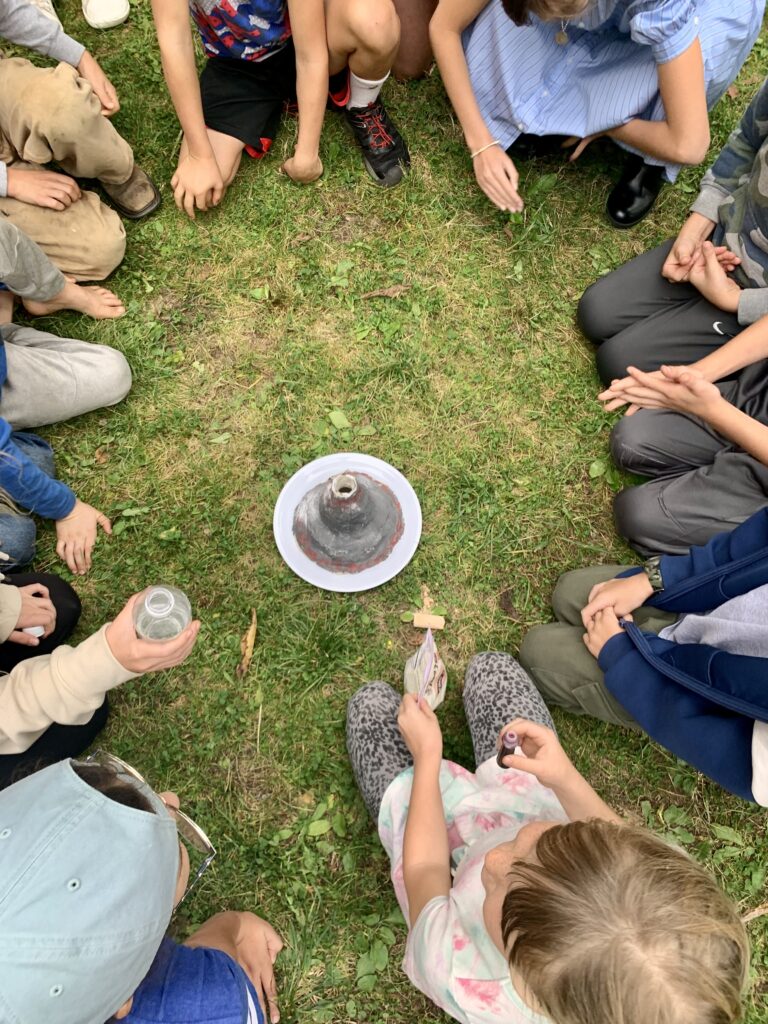
- Hands-on crafts Make sure they are age-appropriate and related to the story (find some ideas online!)
- Outdoor Games inspired by the book’s theme.
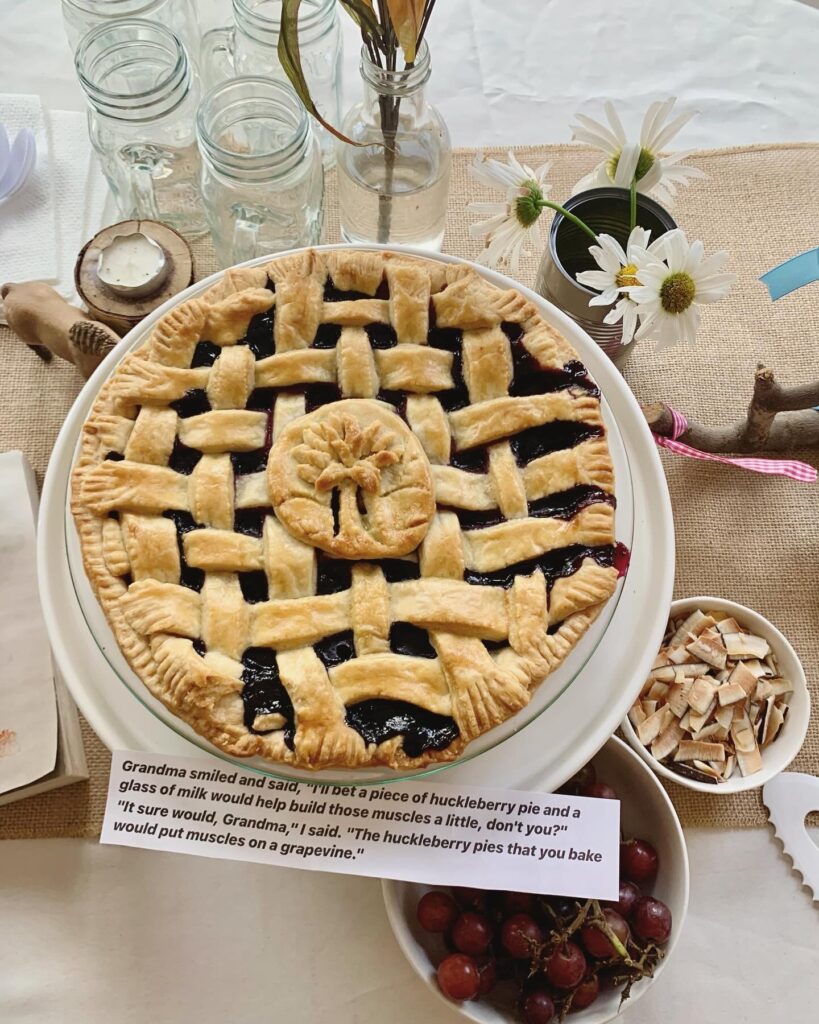
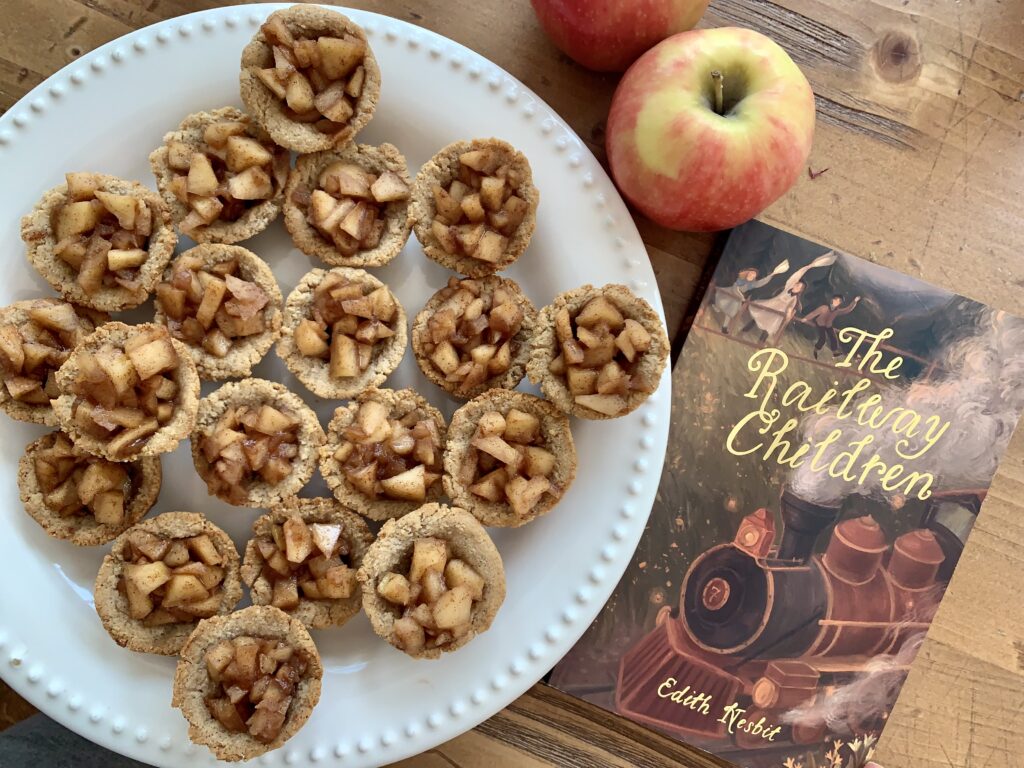
- Themed Snacks—think about what foods are mentioned in the story and assign different families to bring them – potluck-style has always worked great for us!
Step 4: Create a Welcoming Atmosphere
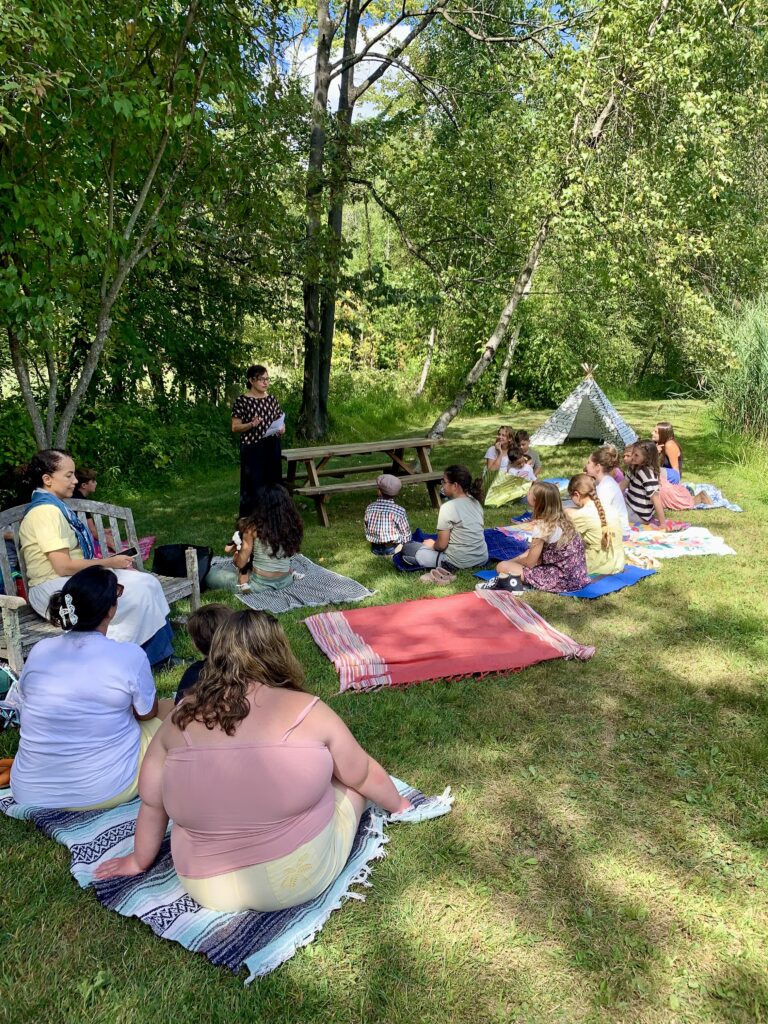
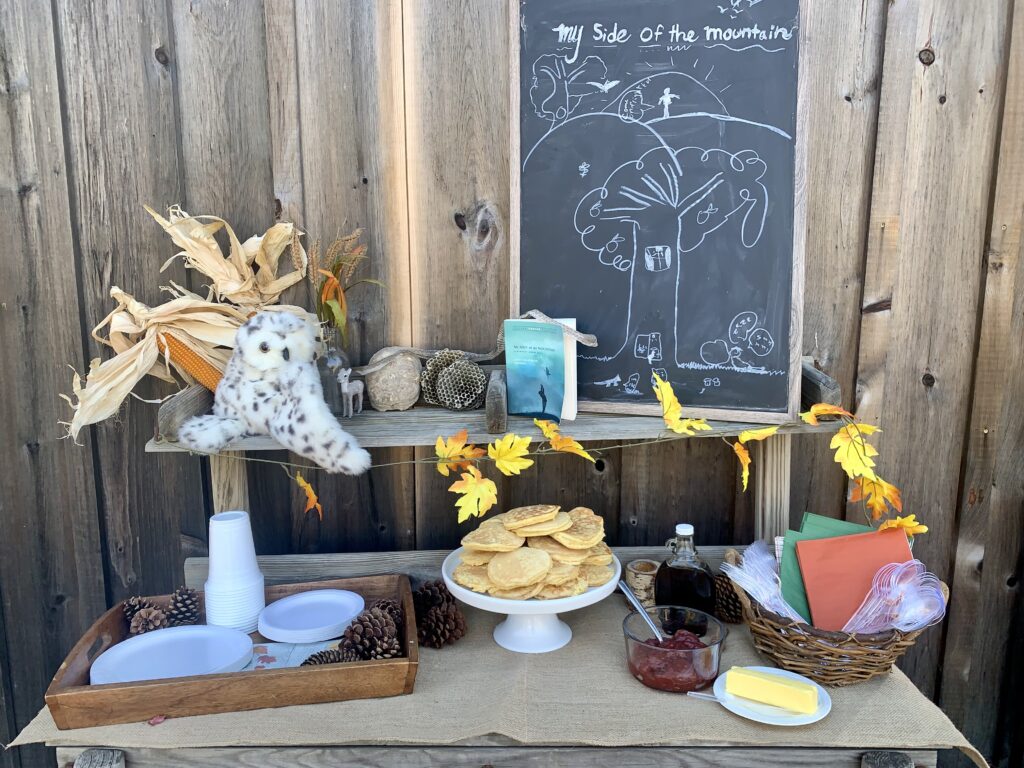
Whether you meet at your home, a park, or a library, set the scene to bring the story to life. Background music, picnic blankets, themed decorations, or even a few simple props can really make the experience feel magical!
How Kids Can Prepare for Book Club Meetup
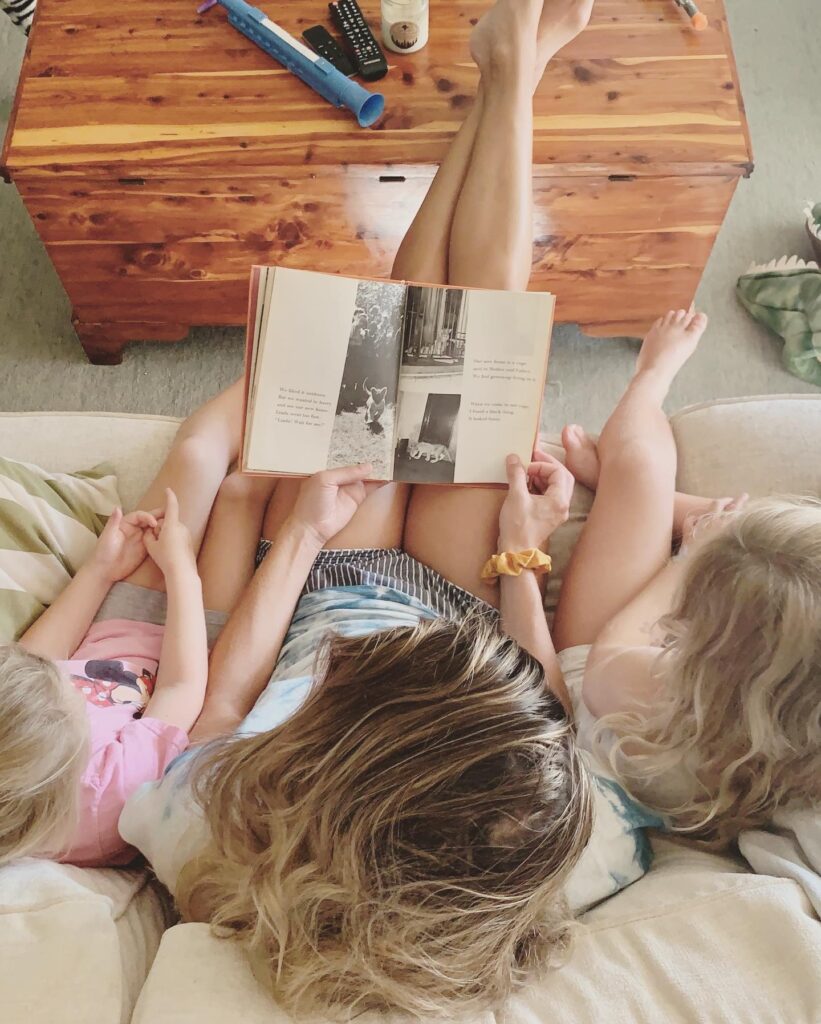
- Read or Listen through the entire book! This is our rule for attending the book club meet-up. The whole reason why I started a book club was to get our family reading more. Sometimes I read the book out loud, sometimes my kids do, or if we are short on time we’ll find the audio book version and listen to that together. This is a really great book about Family Read Alouds.
- Dress Up – Invite kids (and even parents!) to dress up as a character or from the time period/culture in the story. We just had a parent come in a costume for our last book club and it made it so special. It encourages kids to do the same and helps create memories.
- Presentation Time – Tell children they can participate in a time of “presentations” – sharing a project, art piece, or something created that was inspired by their reading. This is one of my favorite parts of our meet-ups. I love seeing how differently every child interprets the story and what impacted them the most and how the express it through clay figures, drawings, watercolor, story-telling, etc! Each child takes a few minutes to stand in front of everyone and talk about what they created. This is also a wonderful way for them to practice public speaking.
Step 5: Keep It Consistent
Pick a regular schedule (we find that monthly works best for us). You could always pick one book per quarter of the year if you want to do them less frequently. Send reminders to families and share what book we are currently reading, any ideas of foods they can bring to the meet-up and any other items for doing crafts and project, etc. I usually send out an e-mail to everyone a few times before each gathering. Consistency helps kids stay engaged and looking forward to the next meetup! After book club meet-ups I always make it a point to send out a recap e-mail with pictures and videos from our time together.
Tips for Success
- Keep meetings shorter for younger kids (45–60 minutes) or allow most of the time to be unstructured playtime
- Let kids share their thoughts without over-correcting
- Rotate hosts/locations if possible—it keeps things fresh
- The goal is JOY, not a perfectly structured lesson
Fun Reading Gadgets for Kids
A Yoto Player is great for listening to audio books and a few of the classic “living books” I mentioned above are on Yoto cards for purchase. Our family has listened to Anne of Green Gables and Treasure Island on the Yoto player but I know they have Chronicles of Narnia, The Boxcar Children and many more. This gadget is great for travel or for kids to listen while folding laundry or cleaning their room!
This Kids Kindle in color would be a perfect gift to invest in for a young reader!
This is one of our favorite rechargeable reading lights for bedtime reading.
Final Thoughts
Starting a kids book club for homeschoolers is a wonderful way to blend education and engaging with community. With just a little planning and creativity, your group will certainly look forward to every meeting. The stories you read together will spark imagination, build friendships, and inspire a lifelong love of books!
Please let me know if this has been helpful for you, and if you have any questions or comments I would LOVE to hear them! Please connect with me!
You can see some of our past Book Club meetups for more inspiration HERE!
Leave a Reply